
When people hear that they need surgery, their first thoughts are usually about the procedure itself.
Will the operation be successful? How long will recovery take? When can they return to their normal lives?
Far fewer people realize that one of the most important factors influencing surgical outcomes is their condition before surgery.
This is where prehabilitation comes in.
Prehabilitation is a proactive, evidence-based approach that helps patients optimize their physical, nutritional, and mental health before an operation. The goal is simple: to help patients arrive at surgery in the best possible condition and support a faster, safer recovery afterward.
As modern surgical care continues to evolve, prehabilitation is becoming an increasingly important part of perioperative medicine.
Why Is Prehabilitation Important?
Surgery places considerable stress on the body.
Following an operation, patients must cope with inflammation, temporary loss of muscle strength, pain, reduced mobility, and the body’s increased energy demands during healing.
The better prepared a patient is before surgery, the greater their physiological reserve to handle these challenges.
A useful analogy is preparing for a marathon.
No one expects to perform well by starting training on race day. Instead, success depends on weeks or months of preparation. Surgery is no different.
Preparing beforehand can help your body recover more efficiently afterward.
What Does a Prehabilitation Program Include?
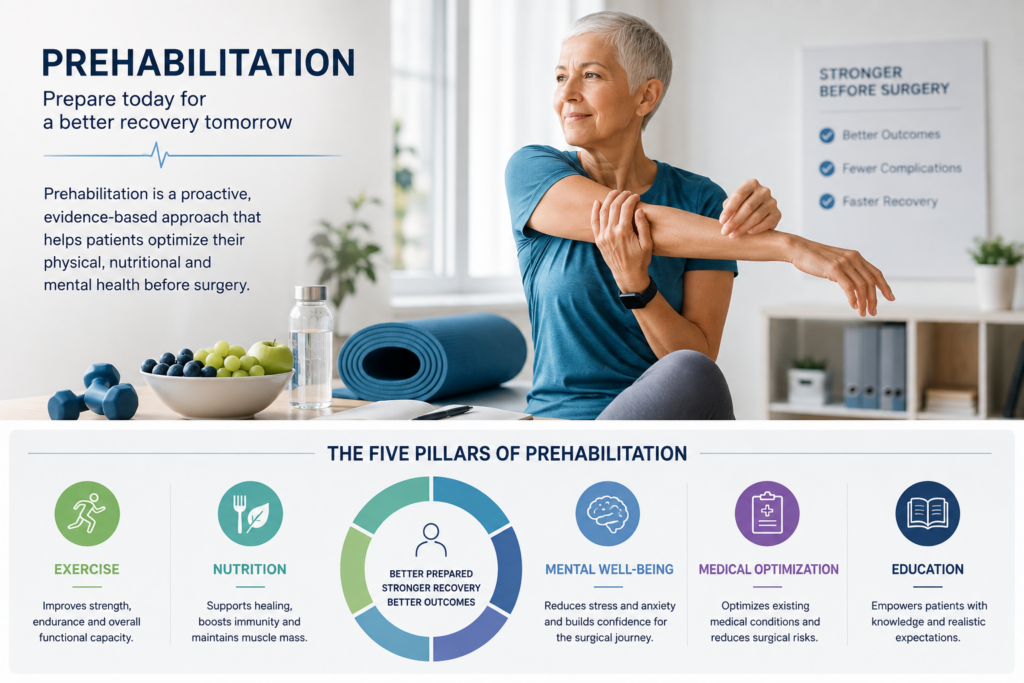
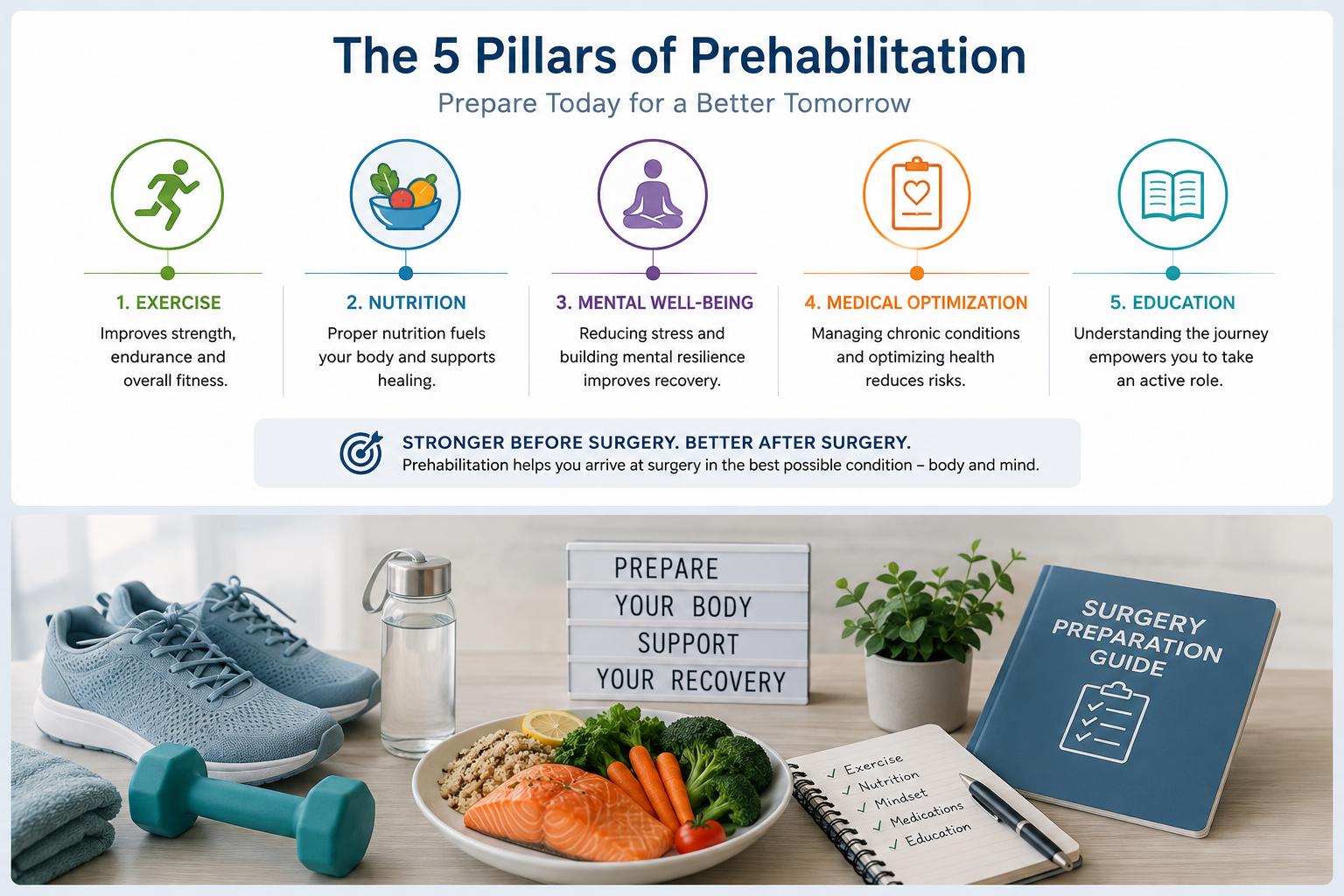
Although every patient is different, most comprehensive prehabilitation programs focus on five key areas.
1. Physical Exercise
Exercise is one of the cornerstones of prehabilitation.
Personalized physical activity can improve:
- cardiovascular fitness,
- muscle strength,
- balance,
- mobility,
- and overall functional capacity.
Even moderate exercise performed consistently before surgery may help improve postoperative recovery.
2. Nutrition
Nutrition plays a vital role in preparing the body for surgery.
Adequate protein intake supports muscle maintenance, while a balanced diet provides the energy and nutrients required for healing and immune function.
For some patients, consultation with a registered dietitian may be beneficial, particularly if malnutrition or unintended weight loss is present.
3. Mental Preparation
Preparing mentally is just as important as preparing physically.
Many patients experience anxiety before surgery, which is completely normal.
Education, relaxation techniques, stress management, and psychological support can help reduce anxiety and improve confidence throughout the surgical journey.
4. Optimizing Existing Medical Conditions
Patients with chronic illnesses such as diabetes, hypertension, heart disease, or respiratory conditions often benefit from optimizing their treatment before surgery.
Ensuring these conditions are well controlled may reduce perioperative risks and improve recovery.
5. Patient Education
Patients who understand what to expect before and after surgery are often more engaged in their own recovery.
Education empowers patients to make informed decisions, follow postoperative recommendations more effectively, and actively participate in their rehabilitation.
What Does the Evidence Say?
Over the past decade, an increasing number of clinical studies have investigated the effects of prehabilitation across different surgical specialties.
Overall, current evidence suggests that structured prehabilitation programs may improve functional recovery, reduce certain postoperative complications, and shorten hospital stays in selected patient populations.
The magnitude of these benefits depends on several factors, including the type of surgery, the patient’s baseline health, and the design of the prehabilitation program.
As research continues to evolve, prehabilitation is becoming an integral component of modern perioperative care.
How Does Prehabilitation Relate to ERAS?
Prehabilitation and Enhanced Recovery After Surgery (ERAS) share the same philosophy: improving patient outcomes by optimizing every stage of the surgical journey.
ERAS pathways combine multiple evidence-based interventions before, during, and after surgery to reduce complications and accelerate recovery.
Prehabilitation strengthens this approach by focusing on preparing patients before the operation even begins.
Rather than treating surgery as a single event, both ERAS and prehabilitation recognize that successful recovery starts well in advance of the first incision.
The Role of Digital Health
Delivering individualized prehabilitation to every surgical patient can be challenging.
Healthcare professionals often face increasing workloads, while patients need continuous guidance throughout the weeks leading up to surgery.
Digital health platforms can bridge this gap.
They can provide:
- personalized daily plans,
- educational resources,
- reminders and motivational support,
- progress tracking,
- and better communication between patients and healthcare teams.
Technology cannot replace healthcare professionals, but it can extend their reach and help patients remain engaged throughout the perioperative journey.
Looking Ahead
Prehabilitation represents a shift in how we think about surgery.
Instead of focusing solely on the operation itself, modern healthcare increasingly recognizes that preparation is an essential part of successful treatment.
The objective is not simply to perform excellent surgery.
It is to help every patient achieve the best possible recovery and quality of life.
At SurgeON, we believe digital innovation has the potential to make evidence-based prehabilitation more accessible, personalized, and scalable than ever before.
Because successful surgery doesn’t begin in the operating room.
It begins with preparation.